



Half-empty lecture hall, some classmates already on the threshold of REM sleep, and the professor is explaining the difference between SWOT and PESTLE analysis. Those who are awake are wondering what on earth it’s good for, and those who are asleep have already stopped caring…
We fully understand that from a student’s perspective, analysis is one of the tedious steps before the real operational work begins – the cool creative things you actually do during campaigns. Analysis often means mining, digging through the far corners of the internet, assembling various charts, finding connections that no one else (sane) would see. Let’s be honest: it’s a thankless job. And guess what? It’s very likely to be one of the first tasks you’ll have to tackle if you land a job in public relations!
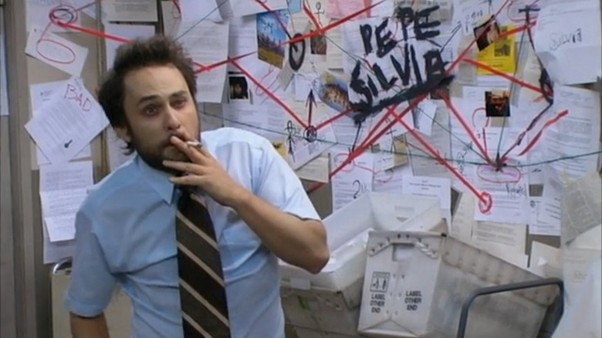
At the same time, if you have even a small inclination towards research and drawing your own conclusions, analysis can be a wonderful thing – and a niche where you might find your place. Things have changed enormously in recent years, and modern AI tools make analysis far easier than it was 10+ years ago. This blog post will present the key elements of analyses in CTA komunikacije communication strategies, which we develop for the majority of our clients and projects, and we will also offer some tips on how to approach them in the best possible way.
***Of course, this is a good moment to remind you of our approach to using AI tools, they are excellent and useful, but they cannot replace your brain. Whatever your favourite ChatGPT, Gemini, Claude, or some fourth option spits out, switch on your critical mind, verify it, and always draw your own conclusions.
Client Analysis: Who Are You Actually Dealing With?
The first step of any in-depth analysis is to get to know the person, organisation, company, or institution you will be working with. Who are they, what do they do, how do they operate, and how do they make decisions? More importantly, is there anything that is not immediately apparent, and is there anything to be cautious about? You need to find all of this out in the early stages of collaboration – most easily through a few good, open-ended meetings and some basic research. Think of this sub-section as a brief introduction to everything you will write later in the strategy.
It is also very important to find out how the client has conducted their campaigns to date, where challenges may have arisen, and whether there is a crisis somewhere lurking, just waiting to strike.
As the saying goes, you don’t have to like your lawyers or communications advisors, but you always have to tell them the truth.

Example
You’ve been tasked with working with a local association that organises a music festival. At the first meeting, everything sounds great: a good-natured idea, a nice story. But a quick search on Facebook reveals a string of disgruntled comments from the previous year: poor organisation, chaotic entry, a performance cancelled without any announcement. The client hadn’t mentioned any of it. Without the analysis, you would have walked into the campaign blind.
How can AI help you?
Tools like ChatGPT or Claude are excellent for rapidly synthesising publicly available information about a brand – reviews, media coverage, social media comments. Within minutes, you can get an overview of brand perception that would take hours to compile manually. We strongly recommend that you also conduct your own independent internet search after AI has helped. Bear in mind that the best method, ultimately, is a conversation with the client, and that should be your starting point.
Competitor Analysis: What Are Those You’re Competing With Actually Doing?
One of the best ways to understand the situation you’re in and how to run a campaign comes from observing what your competitors are doing. A competitor analysis can be done well or it can be done superficially – the key is to be thorough, go deep, and look carefully at exactly what your “rivals” are doing in communications terms.
Your competitor analysis must, at a minimum, answer the following questions:
- Which channels do they use, and with what frequency?
- What are their key messages and target audiences in their communications?
- And most importantly, what are the untapped niches in communications – where is there room for you to take ownership of the narrative?

Example
You are working for a new local brewery. The competitors are two established brands that communicate exclusively through “tradition and quality.” Their visuals are similar, their tone is the same – traditional and dull. The analysis reveals that none of them tells a story about people: the brewer, the recipe, the local narrative. There is a gap in the narrative, and that is your niche. Your client can take ownership of that entire space.
How can AI help you?
Ask AI to help you analyse publicly available competitor content. You can enter post text, brand descriptions, or slogans and request an analysis of tonality, values, and messages. It is certainly faster than manually digging through the depths of the internet, but remember: interpreting the results is still a job for the human brain!
Media Coverage Analysis: Quality Over Quantity
What a client thinks and wants to communicate, and what the public actually receives once the media has done its work, are often two very different things. For this reason, it is very important to conduct a media coverage analysis at the outset of a collaboration or campaign. For instance, a client may have secured 100 media appearances in the past year, the majority of which are basic service-related items, while some are distinctly negative for whatever reason. You are facing a challenge that you will need to confront as soon as possible and begin building media reputation from the ground up.
A proper media coverage analysis looks beyond the sheer volume of coverage. Sentiment is what matters: positive, negative, neutral? Is there a person on the client’s side who already has an established media profile? Which journalists cover this topic, and how do they approach it? Are there spokespeople in the media space who are shaping the narrative independently of the client?

Example
The client is a small specialised hospital with 80 media appearances per year. At first glance, everything looks excellent. But sentiment analysis reveals that 60% of the coverage is neutral-informational (new consultation hours, notices), 15% is positive, and 25% is negative – mainly letters from readers about waiting times and unpleasant experiences. The volume of coverage is fine; the public image is not. That is a problem that needs to be examined and analysed before you launch any campaign whatsoever.
How can AI help you?
AI tools can today rapidly analyse large volumes of text and identify sentiment, key themes, and recurring patterns. However, there is one major pitfall – AI (still) does not understand irony or local micro-context. Always go through the key topics and pieces yourself and form your own impression. Also, this part of the analysis typically involves the most charts and other visualisations. Use AI to help you with those!
Digital Channel Analysis: What the online crowd is saying about your client
Digital channel analysis means picking up your mouse and keyboard and diving deep into all of the client’s online activity that falls outside the scope of traditional media. That means social media, websites, newsletters, blogs, and the like!
As regards the website: where is traffic coming from, which pages are users visiting and for how long, and where are they dropping off? On social media: which content format drives genuine interaction, who is your audience actually, and does it match the target group? In newsletters: what are people opening and what are they ignoring? In advertising: which concepts work, and which are simply burning through the budget?
Again, it is necessary to move beyond the obvious headline figures. Follower count and engagement are fine, but what matters more is understanding what they are actually telling us. The number of website visitors may be impressive, but if they are staying for only 5 seconds, something is clearly wrong. Go deep and look for trends, connections, and patterns!

Example
A travel agency has 12,000 Instagram followers and is proud of this. A GA4 website analysis shows that Instagram drives only 3% of total traffic and those visitors stay for an average of 8 seconds. Google organic search drives 70% of traffic, with an average session duration of 3 minutes. Conclusion: the agency is investing its creative energy in the wrong channel.
How can AI help you?
AI tools are integrating more and more effectively with analytics platforms. Google Analytics has its own AI insights, Meta Business Suite offers automated recommendations, and ChatGPT can help interpret reports that would otherwise languish unread in some forgotten folder. Ask AI to explain what the data means, and then ask yourself why.
Qualitative and Quantitative Research: If You Have the Budget and the Time, Ask People!
This is the part most frequently skipped in the analysis because there is “no time” or “no budget.” Yet these are the data that will be critical for developing truly SMART key performance indicators, since they will give you the best benchmark.
Quantitative research (surveys, questionnaires) most commonly answers the question “how much?” or “how many?”. How many people share a particular view, what percentage of the audience is aware of the brand… In this way, you ground your hypotheses in statistical data and gain the ability to track changes over time.
Qualitative research (focus groups, in-depth interviews) provides a deeper picture and answers the question “why?”. Why does the public hold a particular perception of the client, how do they see the product, what emotions do they associate with the brand? In this way, you can understand what changes in perception are actually needed and how to achieve them.
Example
A healthy food brand wants to launch a new line of protein bars. A survey (n=200) shows that 78% of respondents “care about healthy eating.” A focus group of 8 participants reveals something the survey did not: everyone buys protein bars as an alibi – they actually eat them with coffee and cake, and the primary purchase criterion is taste, not nutritional content. A campaign based on the survey alone would have missed the mark entirely.
How can AI help you?
AI can assist with preparing interview protocols, interpreting quantitative data, coding qualitative data, and synthesising findings from focus groups. Tools like Claude or ChatGPT can rapidly identify patterns in textual responses that would take you hours to spot manually. Nevertheless, you cannot delegate the actual conduct of the research, as it is a deeply layered task. People sometimes reveal more through non-verbal cues than they intended to, and AI still cannot pick up on that.
Environmental Analysis, PESTLE, and SWOT: A Campaign Does Not Exist in a Vacuum
This is the section that students most often treat as a formality. Fill in the PESTLE and SWOT in ten minutes, slot them into the presentation, move on. Even the author of these lines is not fond of them, but the fact remains that they offer the clearest concise overview of the environment in which a campaign unfolds, and of the opportunities and threats that lie ahead.
PESTLE is a reminder that your campaign, however creatively brilliant, must be adapted to the full range of variables that affect it. The political situation can render an otherwise innocent message either inappropriate or enormously powerful, depending on the timing. The economic climate determines how audiences respond to prices, luxury, and security. Social trends change what is acceptable and what is off-putting. Technology changes where and how people consume content. The legal framework determines what you are permitted to say and how. Environmental sensitivity increasingly determines how audiences evaluate companies.
The SWOT, on the other hand, comes at the end. It is produced once you have gathered all the information the analysis can provide. That means strengths and weaknesses have been objectively verified rather than arising from a gut feeling. Opportunities are grounded in data, not optimism, and threats are real and relevant. In that form, a SWOT ceases to be a formality and becomes a strategic map for everything that follows.
How can AI help you? Once you have completed all of the preceding elements of the analysis, you can ask it to produce a PESTLE and SWOT analysis for you — but we are back to where we started: your brain is the one that must consider everything written there and enrich it with your own insights!
Instead of a Conclusion: Let’s Analyse!
For all the benefits of AI, it still cannot do in your place everything that requires a human being – understanding context, reading people. AI cannot sit down with a client for a coffee and, through a casual conversation, glean more than from 100 pages of documentation. It cannot understand why a local journalist has it in for your client. It cannot grasp the sarcasm in a social media comment. What can it do?
It can accelerate processes, help structure information, and synthesise data. But the thinking must still be yours alone! And that is a good thing, because a growing number of people, both inside and outside the industry, are increasingly abandoning that thinking process. Algorithms do everything for us, are we here just to breathe? No, we are here to strive to understand context, ask smart strategic questions, and genuinely think about what we are working on.
Analysis may be old-fashioned, but using your brain has never been more cool! With the help of proper analysis, you will undoubtedly achieve better results – from student assignments and cases to your first professional ventures!


